Sunday, April 24, 2011

Final Reflection-Pytash


I have enjoyed the class and believe I would have no trouble teaching The Great Gatsby. This class has helped me learn theories and more about YA lit. I like the idea of pairing the classics with YA lit. I think sometimes when students read classic literature they get confused, but if they can read books more relatable they will break the barrier and make the connections. For me, I want to make texts relatable for the students. The textbook helped break teaching literature apart. Many of the lessons and ideas Jago presented in the book can be intertwined with multiple texts.  I like this idea because each year you can just switch the lessons with texts and save prep time! I really enjoyed Chapter 3 because I always wondered how these books were chosen. This chapter allowed me to understand the criteria, and it helped me start to think how I would pick my own books for my classroom. In addition, there was a booklist, which is my life goal to read.

The lesson plans that we presented really helped me realize the amount of time spent of prep. In addition, time management. For many of us, the classes are only going to be on average fifty minutes. Going to Firestone also opened my eyes. I was glad we went, so we could get more time with students. However, it was amazing how many things I wished I could change. The experience we had at Firestone, I know for me personally, it helped me learn what not to do in the classroom

Final Reflection-Kist


This class helped me think of multi-modality in different ways. In a sense, everything can be viewed as a text. In addition, there are so many ways multi-modality can be intertwined in the classroom. Multi-modality is a way to incorporate traditional teachings with enhanced modernized teaching. For instance, teaching classic literature, and having the students participate with online literature circles. With the growing technology, future generations are going to need the multi-modality in the classroom because that is the society they will live in. Traditional teaching will be a thing of the past. Starting now with Twitter and Facebook, people are able to know what each other is doing at all times of the day. With me personally, “my friends” that I haven’t talked to in years, I still know what they are up to through Facebook. However, through multi-modality people can hinder their communication skills. There needs to be a balance with social interaction. We cannot rely solely on Twitter and Facebook to stay connected to others. Also, there needs to be a balance with traditional in-class discussion along with multi-modality.

Through writing the blogs I am able to express my individual opinions and thoughts of my future teaching. I can decide (for the most part) how I want to teach and what my classroom structure will be. However, with blogs I believe they should be more choice. I am not a fan of forced blogs because it should be the freedom of expression. I think blogs are a great idea and there is so much that can be done with them. I have done blogs for six classes and I can’t say I would continue with any of them. In the classroom, I think I would show students the “hobby” of blogging and the sites they can do it on (in a safe way). I have viewed several blogs before and there are some very creative ones for anyone’s interests. Maybe I would use blogging as a literature circle format, but I probably won’t have students keep a running blog. 

Thursday, April 21, 2011

Pinocchio vs. Naruto

Text and Dialogue:


Pinocchio
 The language is not extravagant with the vocabulary being standard. 
The dialogue was easy to follow. The bubbles were not long, which also helped with the easy read. The sentences were no longer than a couple sentences, which was nice. The font was appropriate and did not take away from the graphics. Interesting it was all in caps, which I associate all caps with screaming. With the bubbles and blocks you could tell the difference between a thought and narration. Words that were italicized, I am assuming those were exaggeration. Sound effects were block letters and a different font. Usually they were the main focus of the page. The narration at times was funny, with the sarcastic nature of the Blue Fairy.


1569319006.01.LZZZZZZZ.jpgNaruto There was more text on the pages, which got confusing at times. Some of the boxeshad several bubbles in them. In some boxes, the words were in the bubbles (102-103). I  couldn’t tell if they were thoughts or narration. Sometimes you could see the sound effects in the background and they were bold compared to the other font. However, in other instances, the captions on 51 and 54-55, were very powerful and took up a majority of the page. Some of the narration used Japanese words, but most of it was in English. The letter seemed to be the same as in Pinocchio and was all caps as well.
Visual Features:
pinocchiobook-1-e1273513883385.jpgPinocchio The characters were not like the Disney folktale Pinocchio. It was interesting how sweet Gepeto’s character played out in the end as evil. The drawings made the characters seem they were always in the shadow.  character looks more like a man than a boy. He seems to intimidating to be a boy. The fairy’s drawing makes her look funny, and she was my favorite with her sly remarks. The town seemed to be old and medieval--especially with the rocky road. The action was external between Pinocchio and the vampires and trying to convince the townspeople of the danger. It is interesting to point out, the characters who were dead (i.e.. the cricket, rabbits, vampires, etc.) were all dressed or colored in black.
Naruto Even though the drawings were black and white they were easier to look at. If they were in color, it would have taken away from all the details provided by black and white. There were more characters to keep track of and whom were presented on the pages. I was a bit taken back by the naked girl (covered partially by clouds). It was interesting that Pinocchio and Naruto had “boy” characters, yet Naruto was much more immature. He was playing pranks and causing ruckus. The scenery was of a Japanese town. The graphics were all based around the Japanese culture. There were even Japanese characters. The action was external-Naruto versus everyone. At the beginning his character is hated by everyone.
General Layout and Design:

Pinocchio Some pages had full animation without any boxes. Then there were some larger boxes that had graphics. Some of the pages had multiple boxes with graphics. Gutters and borders were white and even. Panels varied in size. Some open panels, but a majority were closed. The drawings were in black and white, which added to the mysteriousness of the story. I did not like the “shading” as dots. It was not appealing to look at and to me ruined the picture. It made the pictures seem blurry. They pictures, at times, seemed to blend with one another. I think I would have liked more color because the black was taking away the realism. 

Naruto The borders are black, which surround each box. A majority of the pages havegutters, however, some of the boxes go to the edge of the page. The panels are in no particular pattern because the boxes vary in size. Some of the drawings take up the whole page; therefore, no boxes are on those pages. It took me a little bit to get used to reading left to right. When I moved to the right side of the book I got confused at where to start. Luckily on the top of each page it directed you when a “Read This Way” sign.

Angles and Frames:

Pinocchio I noticed bleeding with the vampires/action and the bubbles; however, it did not take away from the page. There were many close-ups, especially of Pinocchio when his nose grew. I noticed the close-ups were head-shots. Two in particular shots were when Gepetto had a hold of Pinocchio and you got a close-up of him with his teeth. The other one is below it and it is of Pinocchio crying. I was glad they showed close-ups because it really emphasized how Gepetto’s character changed. There are more head-shoulder shots. A couple of full-figure shots. One in particular is of Pinocchio and Master Cherry after they terrorized the “wolf” and “cat.” There were not too many long-shots only to give full-body shots.
600c598c-ac6c-11de-896d-001cc4c03286.image.jpgNaruto There were bleeds from other characters, captions, and bubbles. There were several close-ups, which seemed to be head-shots. One examples is p. 50 of Naruto. However, there are more head-shoulder shots. Usually, those were the focus of an individual box. The action shots were the full-figured; however, they were shown miniaturized. There were not many long-shots just to show after effects.
Rhetorical:
Pinocchio There was exaggeration when Pinocchio was talking. I laughed at some of his cheesy sayings. There was also exaggeration when he was killing the vampires, which was from the graphics. I felt empathy towards Pinocchio at the end when it shows Master Cherry and Gepetto’s graves. The mood is mysterious and dark. The dots cast shadows and gloom over everything. All the vampires wear very dark cloaks, which adds to their mysteriousness. The only part I was confused about was were the vampires and wolf and cat fighting for the same person? The only irony is when Pinocchio told lies to get his nose to grow. There was no realism because this could never happen. Maybe the author is trying to state that lies kill evil. Disorder was the town being taken over, but no one believed Pinocchio. The main conflict was Pinocchio versus the vampires. However, he was dealing with the internal conflict of Gepetto’s death. He blames himself for not listening to his warning. He is trying to justify Gepetto’s death by killing the vampires. The narrator seems like third-person because we get no internal monologue, it is all told as a story. 
Naruto The captions and pictures gave exaggeration to the scene. I could not identify with any of the characters. However, for those who love reading graphic novels, they might find identification with a character. For the most part, the mood was serious because of the conflict and everyone hated Naruto. Naruto joked around, which lighted the mood. The story-line was simplistic. However, there was a lot going on on the pages that made the reading complex. The point of view was from Naruto, readers followed him throughout the story and got his thoughts. There was a relationship with Haruno Sakura, but she didn't like him in the beginning.  


Overall: I liked Pinocchio, besides the dot shading, the pictures were good. In addition, I think the plot was more enjoyable. It was an interesting twist to the Disney Pinocchio.

Tuesday, April 19, 2011

Kist post # 9

The other day, in my Linguistics course, we were talking about first and second language. First language meaning the language you learned in infancy. For many of us, English is our first language. Second language refers to an acquired language you learn after your first language. For many of us, we had to learn a second language in high school. However, according to my professor, each year you are not learning the language you loose 20% of information learned. I took Spanish for three years, and haven't learned anything since my senior year, I would not say Spanish is my second language.


The conversation then turned to if elementary schools should enforce students to learn a second language. A majority of the class, myself included, said yes, we think students should learn a foreign language starting in elementary school or younger. Those that opposed said, elementary schools are already overloaded with material to teach, and it would be a waste of time.
I think that is what is wrong with our society. A good point was brought up during the discussion. As Americans, we say how far more advanced in education other countries are-specifically China and Japan, yet we are not willing to put in the time, effort, or money to want to be that advanced. With everything that is going on in the education world, foreign language programs are the first to be cut. The United States is becoming more global and culturally diverse daily. It many parts of the country a second language is dominate.


In this article: http://www.languagestars.com/benefits.htm, it states that children, as young as toddlers, can learn a new language just as easy as they learned to walk. Learning a second language can also enhance a child's verbal development. The benefits are endless.


Knowing all these facts are amazing and the reality is taxpayers are complaining about paying too much in school taxes. However, in order for their children to get an outstanding education they have to fork over some money. It makes me mad when people complain about school levies. In my mind, education should be a top priority and no classes and no students should be limited.


"Today Governor John Kasich delivered his two-year budget plan to the Ohio General Assembly. The plan slashes funding to K-12 public education by 11.5 percent, from $11.5 billion in the current year to $10.2 billion next year, ratcheting down to $9.7 billion in fiscal 2013." http://www.ohea.org/kasich-education-budget
This article, really puts into perspective the difficulties us teachers are going to have in the years to come. How could be ever let our country get to this where we have to cut funding for education for kids who have no control!


On another more positive and exciting note, Water for Elephants comes to theaters this Friday! :) Everyone should first read the book then go see the movie because Rob Pattinson is in it! I'm super excited. The book was so good, so I hope the movie follows.

Sunday, April 17, 2011

Pytash Chapter 7

I didn't really understand the purpose of the quote by Linda Evangelista. I think it is absurd what she said. And being a teacher is a hard, strenuous, yet rewarding job. I do not think it should even remotely be compared to modeling. 

I do not believe in the graduation tests. There has to be other ways that can determine students progress. An idea I had was students should take "exit" exams in all classes each year that are designed around what was learned that year based around the standards/benchmarks. If the student doesn't pass then they can try again next year. The set-up of the OGT is not a good assessment because if it is used as a graduation test, why is it given in tenth grade? Too much pressure was put on the students at Firestone to pass the ridiculous OGT; therefore, class time was spend worrying about prep work. I feel students loose a year of school because of the OGT.
Jago is right about testing. She does not want to waste her time testing students with multiple-choice questions, character matching, or true/false questions. These types of tests do not measure what students have learned. With literature, I believe in essays or creative projects, specifically essays when it comes to evaluation. I would not shy away from group projects, yet I would have students have the choice of working in groups or solo. Depending on the project, sometimes I would rather work alone. 

Relating literature to the students' life may be challenging, but sometimes it can help them draw inferences better. The example about the election was good because it was transformed into a persuasive essay. I like ideas that can be used for multiple purposes (it saves time).

Saturday, April 16, 2011

Wiki Project (Kist #8)

I will say that the wiki project is by far my favorite project of the semester. Going into student teaching and teaching, I have been worried about how to come up with lesson plans. I am especially worried for my first year of teaching. This project will help save hours of prep time trying to find lesson plan ideas.

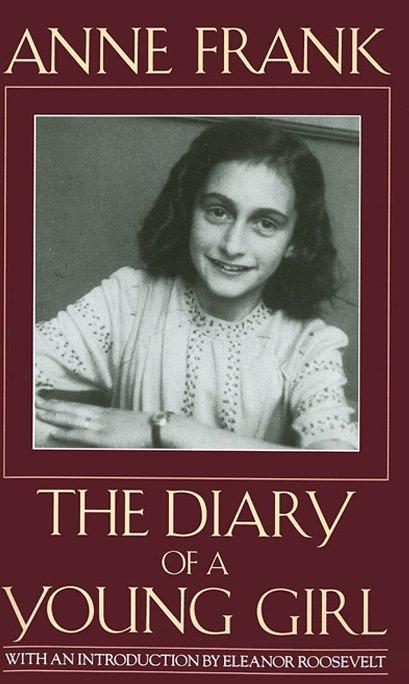
I did The Diary of Anne Frank. I was glad that I got this book because I have always been interested in learning about the Holocaust and the specific time period. In high school, we never read this book. But, the book we did read (I forget what it was called), was similar. In addition, there was an Oprah special, where she interviewed Elie Weisel and they took a tour of Auschwitz. I enjoyed watching that. It was eerie to know that that is all thats left.

I was really surprised that this book is banned from many schools.
http://drexelpublishing.org/2010/02/10/anne-franks-diary-banned-from-classrooms/
People need to stop worrying so much about monotonous things. Classic literature cannot be taught because people complained, and in the end the students are the ones missing out. However, I do not think this book is appropriate for an elementary school. It is a way to teach history and I like that it is from a teenager's point of view, which can help students relate to her.

While working on my wiki, I noticed many of my lessons were incorporated or based with Social Studies. It was kind of hard to find Language Arts lesson plans. I did find a website (it's on my wiki) and it was the Anne Frank website. It allowed you to take a virtual tour of the annex where Anne was hiding. I thought it was interesting, yet eerie to view. Another interesting link I posted was the Anne Frank youTube channel. I think this is a great way to have another perspective while teaching this book. It gave testimonals from people who knew her. It also contains the only raw video footage of her.

I have been looking at the other wikis as they are completed and I am excited to know that I have all these great resources to reference to. All the books are used in the classroom and I recognize all of them (even if I haven't read them). It is comforting to know that others care as much about this project as I do. It is so beneficial and a brilliant project idea!

Sunday, April 10, 2011

Pytash- Chapter 6

In the second sentence of this book Jago states that she is a free spirit who makes lessons as they go along. As I read that, I was like AHHH. I realized that I am too much of an organizational freak to do that. However, it will be something that I will learn to do because my lessons won't always go as planned. One of the points Jago stated that the Writing Project helped her see, which is something I am dealing with is "being a teacher means being a learner." I relate to this because sometimes I beat myself up about not knowing an answer or not being able to help my sister when she asks me for help. However, I am still a learner myself and I am not going to know everything.
I wish we had a lesson plan fair like in Japan. It would especially be beneficial to new teachers. Developing lesson plans off a list of books will be horrid, but if there was some way of getting together with other teachers to discuss lesson plans, it would help take the pressure off. In the end, all teachers are after the same goal, so why not share insight with one another.

The Odyssey lesson plan was very helpful because it could be used for more than one text. In addition, the worksheets could be used too. I think the worksheets will help those students who are visual learners and it will help students have something to reference to. Especially in The Odyssey, characters can get confusing. Character charts and maps are a great way for students to lay out information. Also, I liked how Jago said she displays the state standards around her classroom. I believe this will show students what they have to know and gather from texts. And it will help eliminate the questions "why do we have to know this?"
Getting used to the language of Homer is another issue. By having students analyze epithets, it will help them understand his style of writing. They will soon realize it isn't as confusing.

I think quizzes are an important way for not only teachers, but students to see what they have learned. I am not a fan of plot-based quizzes, but it does show if students have read. I think surprise reading checks are also effective. By surprising the students with quizzes, hopefully they will learn they need to read every night in anticipation for a quiz. However, the one fault is you don't want students to read for a quiz; you want them to read for the learning process.

Pytash- Chapter 4

"Their experience in English classes has taught them that if they just sit back and wait, the teacher will stop asking questions and ultimately explain what it all means" (p. 60). Shocking truth, yet reality. Whoever these teachers are need to go back and redo their schooling or quit. This method obviously does not help the students learn anything. It just shows them if they wait long enough they won't have to do anything. I think that is why it is important for teachers to know how to reword questions and know how to deal with uncomfortable silence.

Another issue I find interesting is when students say they "hate a story." It is one thing to say you hate a story because the characters were too static and stereotypical or the plot was flat. But to say you hate a story because you don't understand it, is unacceptable to me. Students think they can get away with this answer and just not read the book. However, if a student wants to dislike a book, they better come up with some literary reasons.

Students need to know how stories work, in order to understand the actual story. By keeping a running list of literary terms in the classroom and adopting them into every day practice, it will help students adopt these words into their vocabulary. Instead of presenting the words and never using them in context, it is important for the teacher to continuously use the literary terms when refering to literature. I looked up M.H. Abrams's A Glossary of Literary Terms, and it is a great reference book to have. I just wish it wasn't so expensive.

"Effort imprints the reading on students' minds." (p. 67).

It was stated, the more challenging the book, the more the students will remember it, rather than a book a students breezes through. That is an interesting discovery.
I am a huge fan of graphic organizers. I think they are a great tool to help students get involved in the reading, and they are great for referencing. In addition, I liked how Jago modeled how the graphic organizer worked for the students. It helps them develop conclusions about text on their own, and it helps the teacher understand their thinking on text.

Pytash- Chapter 2

One of the many reasons students get frustrated when it comes to literature, is the vocabulary. Why would students want to read something like Shakespeare and not understand the story because of the vocab? However, for students to build a vocabulary they need to read books that have challenging words. That is where I have gained a majority of my vocabulary. Seeing it in books and in context helps me not only read better, but apply vocab to my writing.


"We can only reasonably teach about 300-400 words per year through direct instruction"(p. 22)


I like the bookmark activity that was presented with Poe's "The Fall of the House of Usher." I think it is important for vocab to be taught based on the students. I do not get the purpose of giving a list of words for students to look up in the dictionary. Then have a test on them. This method does not help with the learning process, it just ensures that the students know how to use a dictionary! Making words students bring to class the focus of instruction, helps students get more involved in the text. 


Jago has a good modeling technique to help teach new words. Teaching prefixes, suffixes, and roots, derive meaning through context, and semantic groupings. This help students form habits on how to gain definitions when they are reading alone. I found this to be a problem at Firestone. The students I worked with had trouble finding meaning through context or with root words. Once I modeled how to do it, the students understood the word immediately. By breaking the word apart, I think this helps make it not so intimidating.


"I almost always know the words but struggle to find the right phrase to explain what the word means." (p. 29).


I have this problem too. However, I find that it is easier for me to say synonyms and generate a definition from those. As Jago states, it isn't about if a students can state the definition of a word, but if they can use it in context. She continues to say that the only way students are going to learn and understand new words is through schools and the "daily exposure to quality literature combined with strategic instruction" (p. 31). Now if only we can convince our government of that!


I believe writing is a true test of how well students understand words. My sister is in eighth grade and she had to write a  story for her English class. She wanted me to proofread it, and I was thouroughly impressed with her vocabulary. As I read it, the story was much more interesting because she used quality vocab. I asked her why she chose those words, and she said she wanted to "sound smarter." With students writing, it allows them to demonstrate their interpretation of words and how to use them in context. 

Sunday, April 3, 2011

Cleveland Film Festival

mj180_d7h3946.jpg
 Last night I went and saw Matching Jack. I would consider it a tear-jerking drama. The movie was beautifully done by Nadia Tass, an Australian director. Matching Jack follows the story of the Hagan family, who find out their son, Jack, has leukaemia. While he is in the hospital, Marisa finds out her husband has had multiple affairs over the years. Doctors say to save Jack, the best treatment would be a bone marrow transplant, and the best match would be a sibling. In an attempt to save her child, Marisa confronts her husband's affairs to see if any had children by him. The ultimate theme is, "how far would a mother go?"


http://www.matchingjack.com/trailer/


mj036_dsh9562.jpgFor me the music had a big impact on the movie. When Jack is in the hospital he becomes friends with a boy named Finn. As Finn becomes sicker in the comforts of his own home, the music was gut-wrenching. I balled my eyes out because the music fit so perfectly with the scene. It was overpowering, yet since none of the characters were speaking it really made the scene. When the scenes were happy the music demonstrated, it was upbeat and faint in the background. Some of the music I noticed had singing, which I noticed, but it was only during scenes that did not having dialogue.


mj009_dsh7837.jpgAll the characters did an amazing job with such a huge issue. The two parts that stick out to me are when Marisa and David come home from the hospital and she finally lets out how upset she is by the affairs and tells him to leave. The second part, which made me cry, was when Finn learns his leukaemia is very detrimental. He screams and punches his dad and says how scared he is to die. Kodi Smit-McPhee plays Finn and is only fourteen years old. He was the most touching character for me. He did an amazing job taking on such a serious role. The make-up also had a touch on making him look so sick. They put dark circles under is eyes and made him very pale. His hair looked like it was growing back. It was hard not to feel a strong connection with this character.


mj241_d7h5537.jpgI noticed there were many close-up images of the characters. A specific part is when Connor, Finn's dad, finds out his son is dying. The camera angle is zoomed in on his face. Again, when Marisa finds out her husband might leave her for another woman. The audience really is able to get the pain these characters are feeling. By seeing them so upset, the audience is bound to feel sympathy for them. I think a major reason I got so emotional watching this movie because it is true. Children all over the world are going through life-threatening illnesses. Every day a child is battling leukaemia, every day a child loses his/her fight. And seeing how young these characters were just touched my heart.


mj040_dsh9623.jpgThe way Nadia captured scenes had a large part. Just by noticing the lighting and the tone of the scene you would know if it was happy or sad. The colors and lighting were bright when something good was happening. However, the sad and depressing scenes were dull with minimal lighting. Almost, like a fog was over the scene.


I think this film really represents the documentation of Finn and Jack and their battles with leukaemia. It is a sad realization that children are fighting this disease all over the world. And families are having to deal with the stresses of trying to make their children better, whether that is through love or finding a cure. The love that Marisa and Connor have for Finn and Jack is such an emotional bond. Marisa is pushing aside her own issues to find a bone marrow donor, while Connor is trying to make Finn's last moments comfortable and not so scary. 


I would recommend this movie to anyone.  However, make sure to bring lots of tissues because between the plot, characters, and music, you will be crying the whole time.

Tuesday, March 22, 2011

Kist post # 7

Firestone Experience

After being at Firestone around OGT time, I felt the tension and pressure these students had on them to pass these tests. I understand the OGTs are a major part of funding and statistics to the school; however, the pressure they were putting on these students was too much. We were cramming OGT prep work down their throats, but it was material they should have already been taught and should have been review. However, some of the time I felt I was teaching them the material for the first time. I would like to think we made a difference in these students’ lives, but we were not there long enough and they had already had ten years of schooling and habits instilled. It is hard to break habits they have had for many years.
 I do not like standardized testing, I do not think it should determine anything about students and schools. I think there are other ways to determine such knowledge. Also, I do not understand why we have to have the OGTs, I think there are ways schools can get the same results, without jamming this information to sophomores in a limited amount of time. I felt like when I was a sophomore, the teachers were trying to cram all this information in, when we were supposed to have already learned it. 
Last semester, when I was working with my student I was in her Social Studies, Math, and English elective classes. The time I was there I did not observe any type of test prep exercises. It was not until I went and observed an English class that I saw them working on OGT prep. The class did two worksheets on grammar and that was it. I do not know if they were depending on us KSU students to prepare them or what. I think if the school is making such a big deal about the OGTs then the teachers need to be on board and help prep the students too. When we came back this semester, it seemed the math and science teachers were just handing out packets and telling the students to work on them for their own benefit. To me, the OGT prep was not ideal. The students were overwhelmed by the pressure and the over abundance of test prep. The students should be preparing for it starting their freshman year, so this cramming does not have to happen.
In the future when I get my own classroom, I think it will be important to incorporate the OGT material with daily lessons. To show the students how to pick our author’s opinion, context clues, definitions, themes, etc. Students can do exercises with grammar, punctuation, and spelling like on the OGT, but with their writing assignments. Student can proofread their fellow classmates’ work, similar to the OGT prep. I do not think having students do these endless packets is an effective way for them to pass the tests. While I do not agree with standardized tests, the students have to pass them to graduate; therefore, why not scaffold the material to the students. Ultimately, the material they need to know on the OGT is material they should already know and will need for the rest of high school and college. That is why I think it is important to incorporate it in the daily lessons, so students can learn through modeling. Instead, of doing the packets students can do classwork that still has the same function. For students to be able to apply the skills they know to the OGT they first have to know the basics. I am unsure how multi-modal can be incorporated into test preparation. If the preparation was incorporated into the daily lessons then multi-modal would be easier to use. They can go online and do Webquests or test prep activities. The monotony of packets is outdated. The way Firestone did its test preparation, students got bored and restless. They were rushing through the packets just to get them done, instead of trying to get something educational from them. All they knew was they had to pass this test. 
While working with one of my two students I noticed she did not know how to properly cite a website for a research paper. I asked my student, and she said that is how she always cites. I was dumbfounded. To me, it seemed no one was correcting her. I ran across the same issue when I volunteered for the Get It Done program. I was talking about citing research to a junior from Firestone, and she said she had been citing her material wrong this whole time. I do not understand how you can assign a research paper and not go over the basic foundations for it. Students need to know these basic because once they get to college, professors expect you to know it. When I worked with my students on the OGT Writing, they both had trouble with formulating how to construct their essays, so I showed them how to draw up an outline, which helped them to sort and organize their ideas. That was one of the major issues I saw, were the students’ essays were jumbled together with no organization. Again, they needed to know the basic setup of a simple essay.
Ultimately, our society is concentrated on teachers teaching material and students taking tests. It does not matter what the student learns as long as they get a “passing score.” No, we need to be more concentrated on preparing students to learn core material and to be able to apply it in the world. You run into many issues with standardized testing, some students have trouble applying the information to a test, but in another situation they can apply it. I think the pressure students have with tests, make them loose the real purpose of education. I think if a student knows the material that is more important than an “A” test. However, society notices the students with “A’s” rather than the students who can apply the information for further use. For me standardized tests show if a student is able to take a test and pick the write answer. I do not think it is a fair way to test students on material.


Here are two articles that illustrate the pros and cons of standarized tests. Both sides present good arguments.


http://www.associatedcontent.com/article/76647/good_little_robots_standardized_testing.html?cat=4


http://www.associatedcontent.com/article/76647/good_little_robots_standardized_testing.html?cat=4

Saturday, March 19, 2011

Kist post # 6

Publish or Perish:
I own an iPad and an e-reader. I wanted an e-reader for Christmas, so I did some researching between Amazon (Kindle), Borders ( Kobo), and Barnes and Noble (Nook). What I found was all the book prices were relatively the same. Depending on the features of the e-reader, that is where the cost comes in. Ultimately, I went with the Nook and I am happy with it. I was skeptical about e-readers because I did not think I would like reading off it. However, I do not mind it. I like the convenience of it and being able to buy a book in thirty-seconds for cheaper than it would be in the store. I bought the colored e-reader; therefore, I am able to go on the internet and everything is in color, compared to the Kindle and Kobo that only comes in black and white. There are many features to the Nook, for example, I am able to highlight words, look up definitions, make notes, and bookmark my page. I did not know that you were able to do all that, so that is convenient when I have to read a book for class. The iPad and Nook are about the same, but obviously the iPad can do more. I have books downloaded and have not had any trouble reading them. However, on the iPad I am not able to make the notes that I would need. Now what is nice is that you can download the Nook app from iTunes and share books between the iPad and Nook.

I am a diehard reader, and I will say I am pleased with my e-reader. There are many features you would not imagine it can do. Here is a link to the Nook:
I find it amazing with all the technology and the way books are at our fingertips that more people are not reading. “Forty per cent of the people in the U.S. read one book or less last year.” That is insane to me, I can read one book in a week. During summer break, I average 10-12 books. I believe e-readers or iPad are a way to get people to read more because the availability is instantaneous. There are so many types and genre of books to choose from. People who do not read say they do not have time, but they can watch television for hours. It makes no sense!

I <3 Novels:
I found this article so fascinating and it gave me such a great idea. Technology is such a major part of our society, and the generations to come are going to be far more technologically advanced. I thought it was amazing how there are people who write entire books from their cellphones then are able to upload those onto a website. The stories are mostly directed towards girls: “pregnancy, miscarriages, abortion, rape, rivals and triangles, incurable diseases.”
“Everyone is suffering over their loves and trying to figure out their lives, but my particular struggle was something I wanted to let other girls know about,” she says. “Like, ‘Hey, girls, I’ve been through this, you can make it, get up!’”
Maho i-land: “offers templates for blogs and home pages, is visited three and a half billion times a month.”
I looked at the website and it is solely in Japanese, but there is probably a similar way to upload the stories onto another website. Talk about incorporating technology into the classroom! You could have each student set up a page with a pen name, and they would upload their stories or assignments to it. Obviously, parental permission would have to be obtained and it may take some convincing from the teacher. This would be a twist to a writing class or literature circles.
“A generation is growing up using their phones to shop, surf, play video games, and watch live TV, on Web sites specially designed for the mobile phone.”

Great Films and How to Teach Them:
In the book, it talked about how movies give different people stereotypes. I think it would be a good lesson to have students write down times when they felt their gender, culture, race, ethnicity, religion, etc. were misrepresented in a film. “The persistence of stereotypes has confined many actors to typecast roles” (p.96). Being a woman, it makes me so annoyed when women play dumb-helpless, sexual characters. To see the misrepresentation of who you are on a film gives the representation that that is how most are.
I think teaching the mechanics of film, students will have a better appreciation and understanding of films. The one activity we did in class where we were divided and had to focus on one particular aspect, really shows how much goes into even a short clip. I also think it would be interesting to have students read the book and then watch the movie and find the major differences using literature and film concepts (p. 301).  Another idea is a behind the scene activity. Have students watch a film outside of class individually or in a group (provided you give them a list to choose from) and have them write on topics like: script writing, photography, set design, music, direction, acting, and reception. (p. 297). You can show movies in the classroom, but I think there has to be a purpose to show it. You can get great lessons from showing films and students will think it is enjoyable. I think a unit on film would be fun and show movies from all genres and eras. In one of my classes, my professor showed us a Charlie Chapman silent film and I loved it. I never would have watched a silent film, but it really is incredible to seeing the acting and “special effects” since it was in the early twentieth century. 

Monday, March 14, 2011

Kist Post # 5

After reading You’re Leaving a Digital Trail, I realized how much more further advanced we are in technology. I like my privacy and the idea of someone being able to watch my every move, freaks me out. The things people are coming out with are amazing to me; however, they have their drawbacks. I was watching the news the other night, and they were doing an experiment with cell phones and how hackers can get private information from your cell phones and use it to access your bank accounts. I looked for the video, but could not find it. I feel as if, people do not realize when they put information out like that, it has the potential to end up somewhere unsafe. I feel this is a way to spy on people without them knowing. The experiment Harrison Brown volunteered for reminds me of Little Brother, except Brown knew he was being spied on. His every move was being monitored. The information researchers are able to determine is absurd to think about. 

“We were able to look at people moving around stores and other locations. Such travel patterns, coupled with data on incomes, can give retailers early insights into sales levels and who is shopping at competitors’ stores.”

There are benefits for example, which is not out yet, Personal Environmental Impact Report, this allows people to see how their activities affect the environment and make decisions about their health. Brown does not think it is an invasion of privacy; however, I do. While there may be some benefits, there are more negatives. Steve Steinberg stated, “There were significant chances that it would be misused, ‘This is one of the most significant technology trends I have seen in years; it may also be one of the most pernicious.’” It is people misusing the new technology that is more concerning to me than the benefits. 

The subjects surrounding I’m So Totally, Digitally Close to You, are what are society is about. We are obsessed with what others are doing. I admit, I am one of those people who get on Facebook to see what others are doing. It is a way to know without talking to the person face-to-face. It is communicating to everyone without having to repeat yourself ten times. However, there are times when people post things and I wonder, “who really cares” or “why would you post that.” Sometimes I do not think people think when they post something. I do believe anyone older than our generation does not understand the phenomena of Facebook. They do not understand why people post so opening about their lives. They worry about privacy; however, you are in control of the information you are sharing and who you are sharing it with. I am very conscious about whhat I want people to know and who I am friends with. According to Clive Thompson it does pose the questions however, 


“What sort of relationships are these? What does it mean to have hundreds of “friends” on Facebook? What kind of friends are they, anyway?” 


I know many of the people I am friends with, but would I consider them friends in “real life,” probably not. The one phenomena I have not adopted is Twitter. I know I should at least try it, but I do not want people to know what I am doing every second. I have looked at celebrities’ Twitter accounts, but I do not think my life is that interesting that I need to share my life. It makes a full circle in saying people are so totally, digitally connected. It brings a new meaning to, everyone knows your business. 


The article Learning by Playing: Video Games in the Classroom, made me ask many questions while I was reading it. I think video games have a bad first impression on people. I think they immediately think of the violent, uneducational games. However, apparently this school has found a way to base a curriculum off video games. First off, the funding they get for this school is legit. However, basing the curriculum around media is too much for me to understand. “Nearly every aspect of life at Quest to Learn is thus designed to be game-like, even when it doesn’t involve using a computer.” I think it is a good idea to bring technology into the classroom, I am all for that to spark students’ interests, but to have it be the base and foundation of the curriculum has me worried. The more I read the more questions I had that were still not getting answered. Unless I missed it, there was no mention how the core classes were taught. With a curriculum of video gaming how do you teach reading or writing? The article mentioned that this is the twenty-first century and it is about what students can use in the future; however, I would argue that it would be hard to teach this through video games. In addition, are they getting enough lessons on the core classes? 
Another point I was wondering is this school is only open for sixth and seventh graders, so what happens when they go to high school? Al Doyle, a teacher at Quest to Learn at the time, said, “We feel like we’re preparing these kids to be producers of media — whether they become graphic designers, video designers, journalists, publishers, communicators, bloggers, whatever.” Therefore, these kids go to a specialized high school for this? What if they realize this is not what they wanted to do? What happens to them in high school? I feel as if they would get lost. Even their grading seems “elementary” to me.


“Students don’t receive grades but rather achieve levels of expertise, denoted on their report cards as “pre-novice,” “novice,” “apprentice,” “senior” and “master.” 


I feel, if these kids are not going into some related field this information may be wasted and they might miss out on other learning opportunities. I was really confused on the article and the function of the school, I do think intertwining technology into the classroom is great, but to have a curriculum based around it is questionable.